"Several Dutch painters are said to have studied and imitated, in their paintings, the effect of the camera obscura and its manner of showing nature, which has led some people to think that the camera could help them to understand light or chiaroscuro. The effect of the camera is striking, but false," said the Dutch astronomer, physicist and philosopher Willem Jacob 's Gravesande (1688-1742) at the beginning of the 18th century.
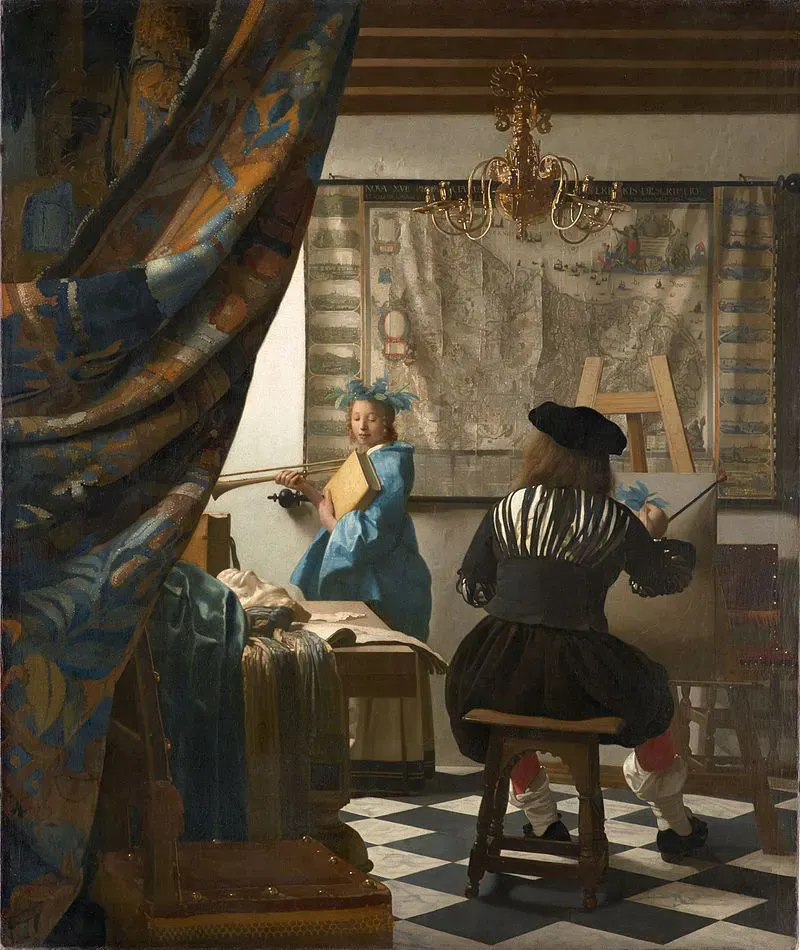
In 2001, artist David Hockney co-published Secret Knowledge: Rediscovering the lost Techniques of the Old Masters with physicist Charles M. Falco, in which they explained with the help of painting examples that some of the old masters had used optical aids such as a camera obscura in order to be able to paint as incredibly realistically as they were did. This assumption went down in art history as the Hockney-Falco thesis and met with both positive and negative reactions. The latter were mainly triggered by the fact that the thesis seemed to imply that said artists might not have been as ingenious and talented as was previously assumed. However, early statements about a possible use of the camera obscura, such as those of Gravesande, went unheeded.
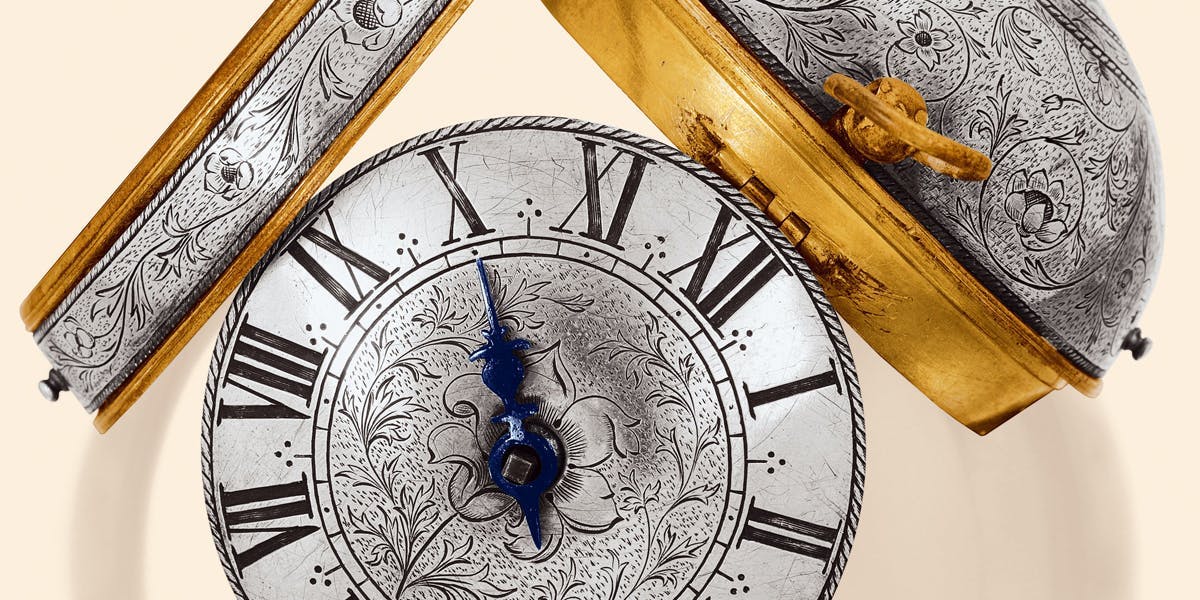
In its simplest form, a camera obscura (Latin for "dark room") is a lightless box with a hole in one wall through which well-lit objects in front are projected onto the opposite wall, albeit upside down. This phenomenon was already in use in the 4th century BC as described by the comprehensively educated Aristotle. Hundreds of years later, the Arab mathematician and astronomer Alhazen (around 965 - after 1040) undertook significant experiments. He is considered the inventor of the magnifying glass due to his knowledge that curved glass can be used for optical enlargement. Alhazen's knowledge reached Europe as late as the Middle Ages, where the holes in the camera obscura were replaced by ground lenses in the 16th century.
At that time, the classic camera obscura was big enough to step inside and view the projected image. Other versions projected the illuminated object onto a transparent surface so that the image could be viewed and "processed" from the back. The first portable camera obscura was built in 1686.
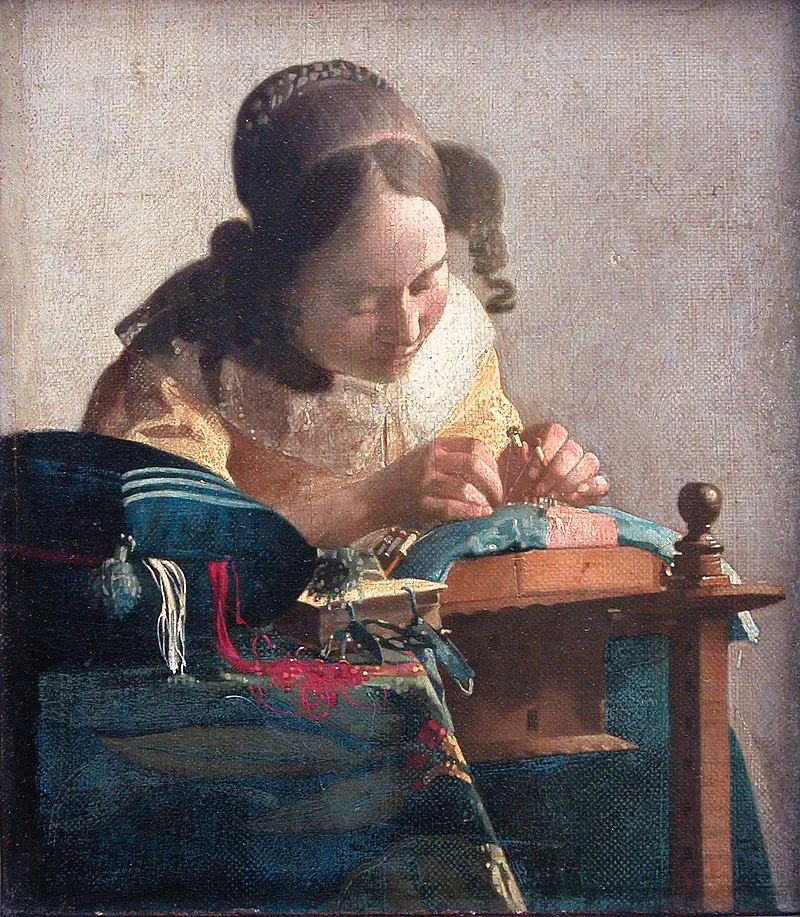
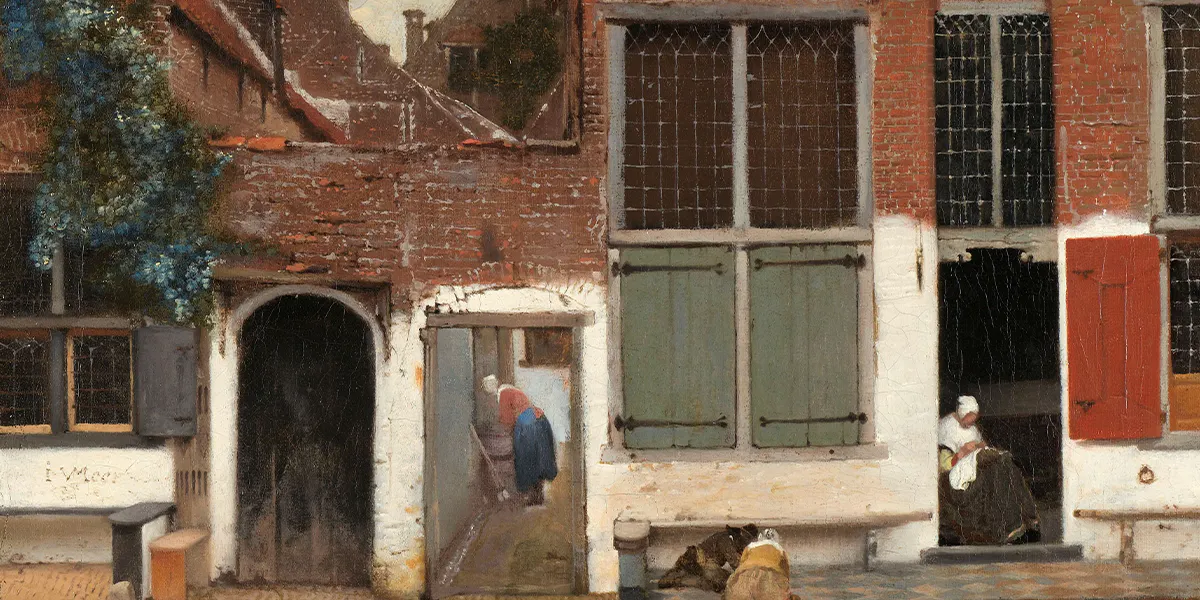
Jan Vermeer (1632-1675) was one of the Old Masters who was and continues to be caught in the vague of suspicion of using a camera obscura. Why? Because he knew how to deal with light, colors and perspectives and use them like no other painter did.
Related: Jan Vermeer: The Mysterious Master of Light
Less than 40 paintings by Jan Vermeer are known today. It is questionable whether there were really many more, since he only ever executed about two works per year of his 20-year career as a master painter. In general, very little is known about Vermeer and his education. Despite his small output, he was able to feed the growing number of children he brought into the world with his wife Catharina Bolens. Vermeer must have had a certain reputation during his lifetime, to which he owed various patrons and the Guild of St. Luke in Delft. Nevertheless, by the end of his life he was in so much debt that his widow renounced her inheritance after his death.
Related: 6 Iconic Dutch Paintings
In the mid-19th century, however, French art historian Théophile Thoré rediscovered Vermeer. Thoré recognized Vermeer's ingenious handling of light, as he also praised the same of the Impressionists he promoted. One of them, Renoir, even considered Vermeer's The Lacemaker one of the "most beautiful pictures in the world."
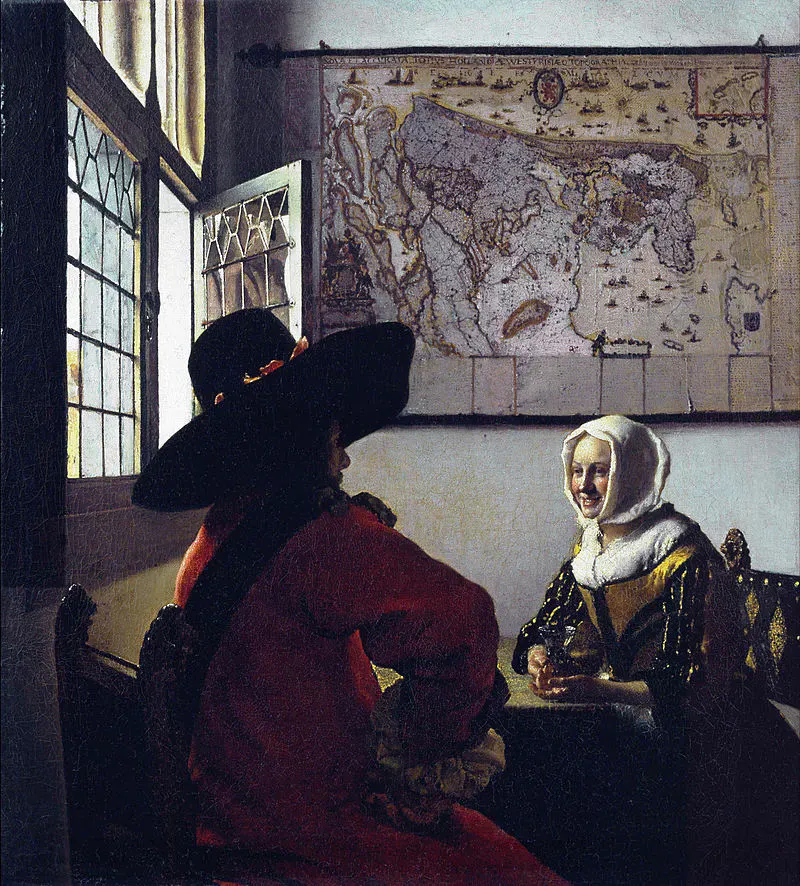
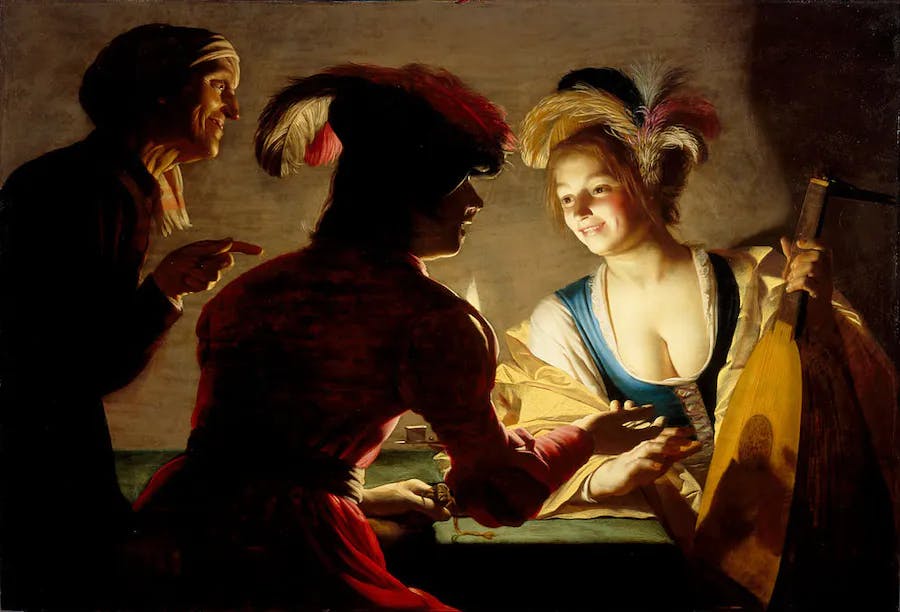
Assumptions that Jan Vermeer used optical aids for the execution of his paintings, which were perfect in terms of perspective and color technology, were already made by the end of the 19th century. The basis for this claim was Officer with a Laughing Girl. In the 1658 painting, two people sit opposite each other at a table, illuminated, as is so often the case with Vermeer, by a light coming from the top left. The officer sitting in the foreground with his back to the viewer is shown much larger than the girl. Of course, this is correct in terms of perspective, and the naked eye also perceives this, albeit not as strongly as a camera obscura. However, painters of the 17th century preferred to depict people of different sizes in perspective so they would all be the same size. An example of this is The Procuress by Gerrit van Honthorst (1592-1656). The people here are grouped in a similar way to Vermeer's painting, but are all represented in the same size.
However, Vermeer seems to have had a keen interest in perspective. The French physicist Jean-François Nicéron had already described how useful a camera obscura could be for depicting perspective in the mid-17th century. A camera obscura can also be used as a means of determining a successful composition, as the objects and people can be moved until they are in the perfect position in the picture - and without having to draw a single line.
Related: The 10 Most Famous Works of Art and Where to Find Them
The London architect Philip Steadman was able to show in 2002 that at least a third of Vermeer's paintings must have been created in the same room. Steadman measured the maps shown and compared the dimensions of the floor tiles in the paintings with those now surviving from the period, suggesting that the space in which Vermeer's most famous paintings were painted must always have been the same. If you factor in the section near the window, a permanently installed camera obscura could be a logical explanation.
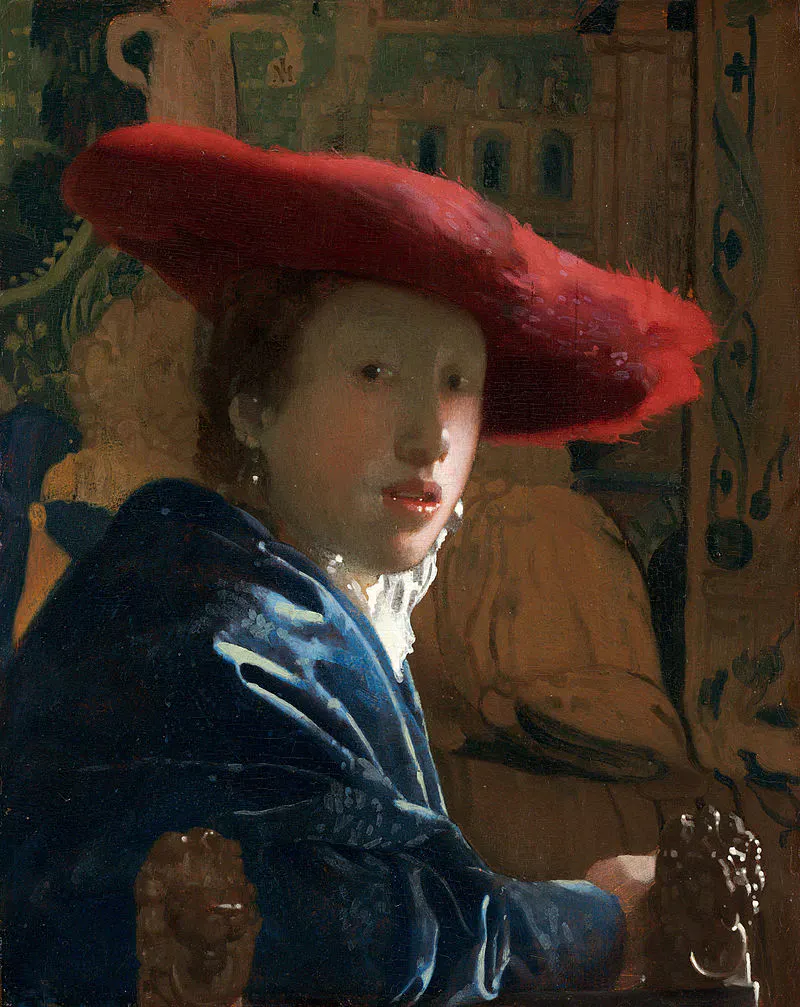
In addition to a perfect perspective and a balanced composition, Vermeer's paintings stand out particularly because of their coloring and the use of light. A characteristic stylistic device of Jan Vermeer are highlights, which particularly emphasize reflective surfaces and ensure liveliness. Of course, the human eye also perceives such highlights, but not as precisely as the lens of a camera obscura. The effect of the circles of confusion in Vermeer's paintings seems to be even more convincing as these blurry spots occur in photography but also in projections. These cannot be seen with the naked eye. However, they are part of some of Vermeer's works, such as The Girl in the Red Hat, as exemplified by the somewhat blurred reproduction of the right lion's head on the back of the chair in the foreground.
Related: A Vermeer Painting Restored to Original Composition
The evidence for Jan Vermeer's use of a camera obscura can only be found in Vermeer's paintings themselves. There is no tangible evidence that he actually owned one. Neither a complete camera obscura nor parts of one were listed in his estate.
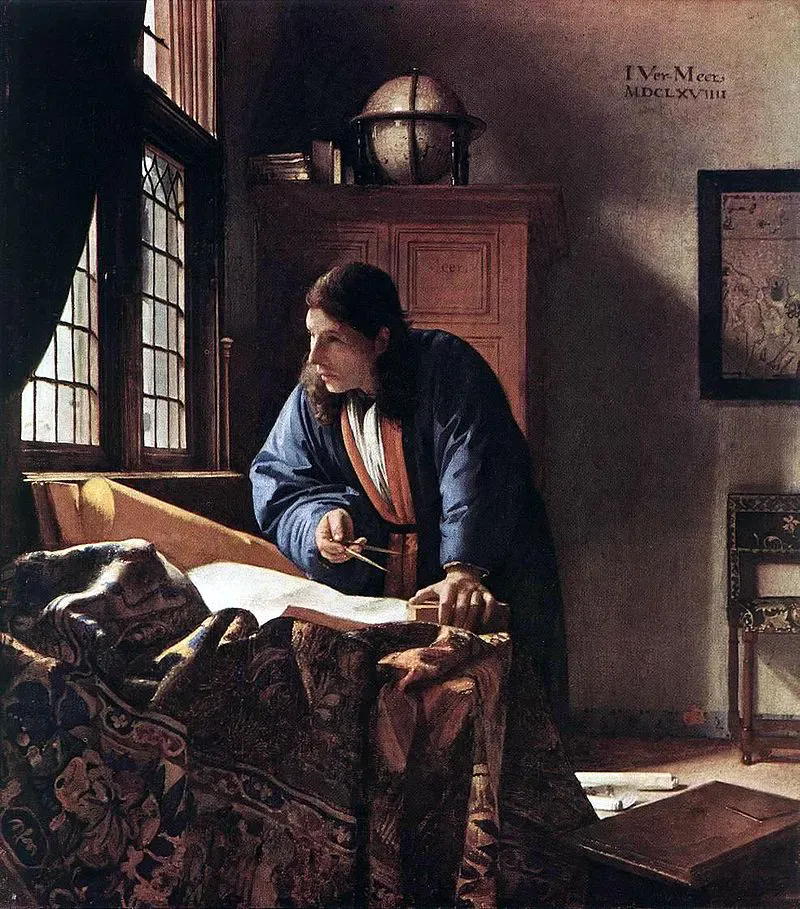
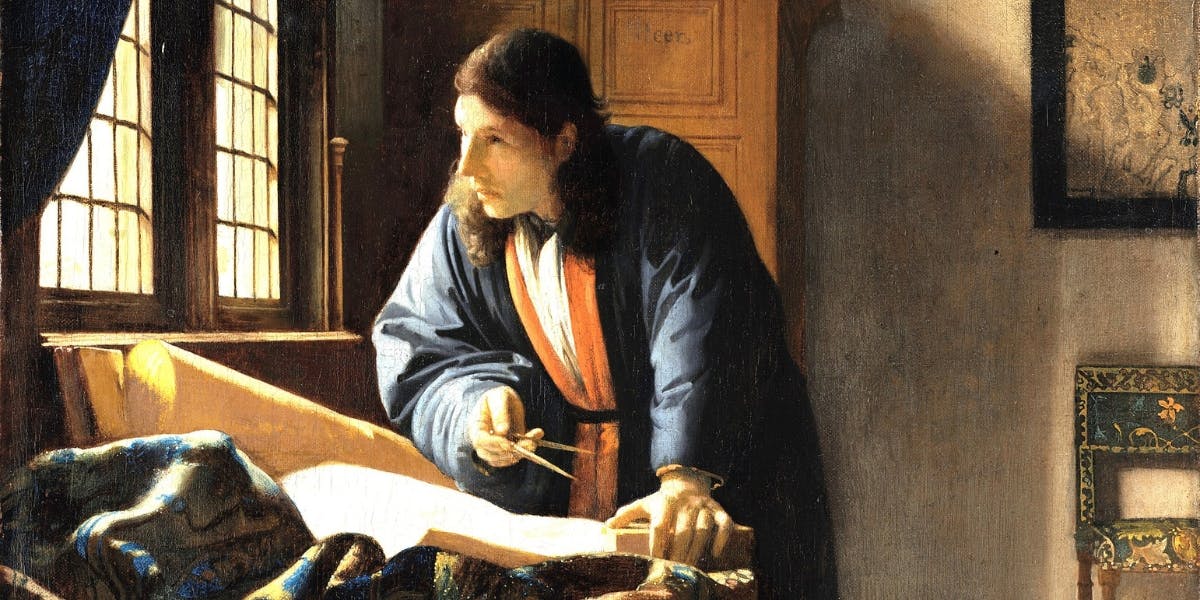
But he would definitely have had access to the world of optics. A neighbor and friend of Vermeer's was the natural scientist Antoni van Leeuwenhoek (1632-1723), who built light microscopes and was able to produce excellent lenses for the 17th century. Van Leeuwenhoek is said to have posed for Vermeer's paintings The Astronomer and The Geographer and was also the painter's executor.
Related: A Cupid Revealed in a Vermeer Painting after 300 Years
Perhaps Jan Vermeer didn't want his use of a camera obscura to be known? What did other artists of that era think about it? An interesting episode is the one reported by the Dutch diplomat and poet Constantijn Huygens (1596-1687). Huygens was a great art lover and connoisseur and also interested in the technical progress of his time. In his autobiography, Huygens hinted that the camera obscura was widely known at the time, including among painters. When he visited the painter Johannes Torrentius (1589-1644) and demonstrated a camera obscura that he had previously bought in London, Torrentius pretended not to be familiar with such a device. Huygens surmised that Torrentius wished to avoid appearing as less talented.
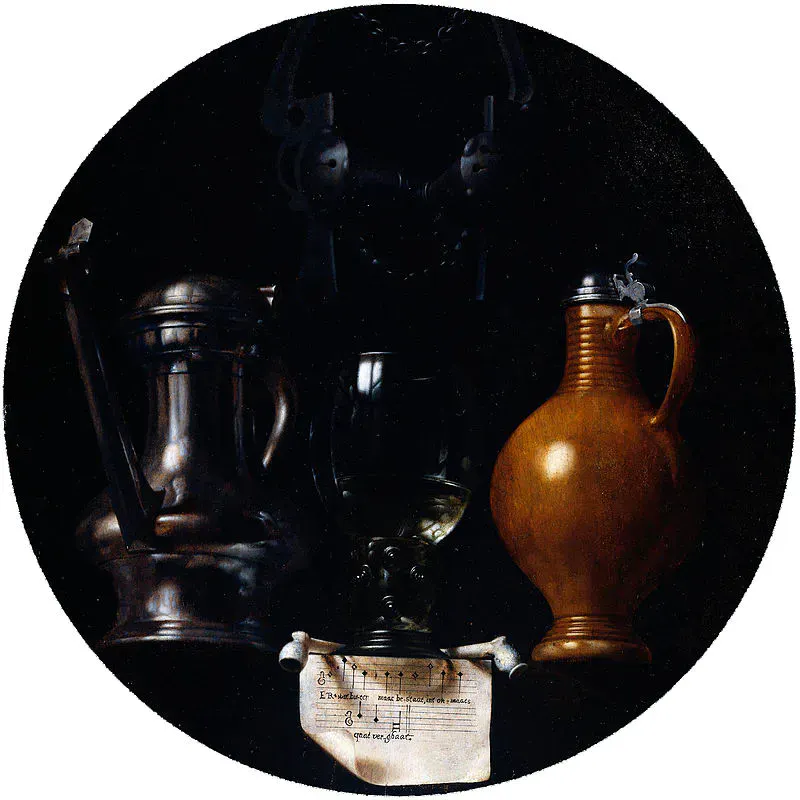
Huygens went on to say that there was a clear discrepancy between the quality of Torrentius' still life and figural scenes, the latter not being able to match the former. Since Torrentius tried to keep secret the use of a camera obscura, he naturally could not use it in front of witnesses, such as his living models.
Want to discover articles like this straight to your inbox? Sign up for our free newsletter!
The only two surviving eyewitness accounts do not mention a camera obscura in the house of Vermeer. In the diary of the French diplomat and travel writer Balthasar de Monconys (1611-1665), who visited Vermeer in his studio in the summer of 1663, he expresses himself quite undiplomatically: "In Delft I saw the painter Verme(e)r who did not have any of his works: but we did see one at a baker's, for which six hundred livres had been paid, although it contained but a single figure, for which six pistoles would have been too high a price." After this devastating judgment by a Frenchman, it is conciliatory that Vermeer was rediscovered in the 19th century by a compatriot.
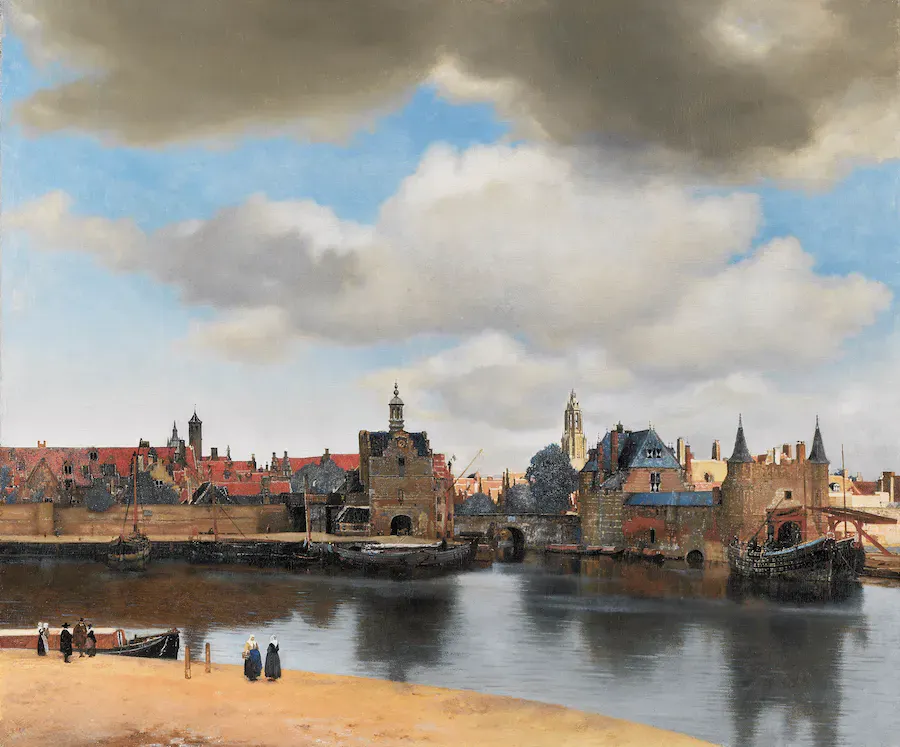
Far more sympathetic was the young landed gentry Pieter Beding van Berkhout (1643-1713), who visited Vermeer in May and June 1669 and recorded in his diary: "After arriving in Delft I visited an excellent painter named Vermeer, who gave me some curiosities made by his own hand" and "I set out to visit the celebrated painter named Vermeer, who showed me some examples of his skill, the most extraordinary and remarkable aspect of which is perspective." With the exception of the extraordinary perspective mentioned above, this statement gives not the slightest indication that Vermeer could have had a camera obscura installed in a corner of his studio.
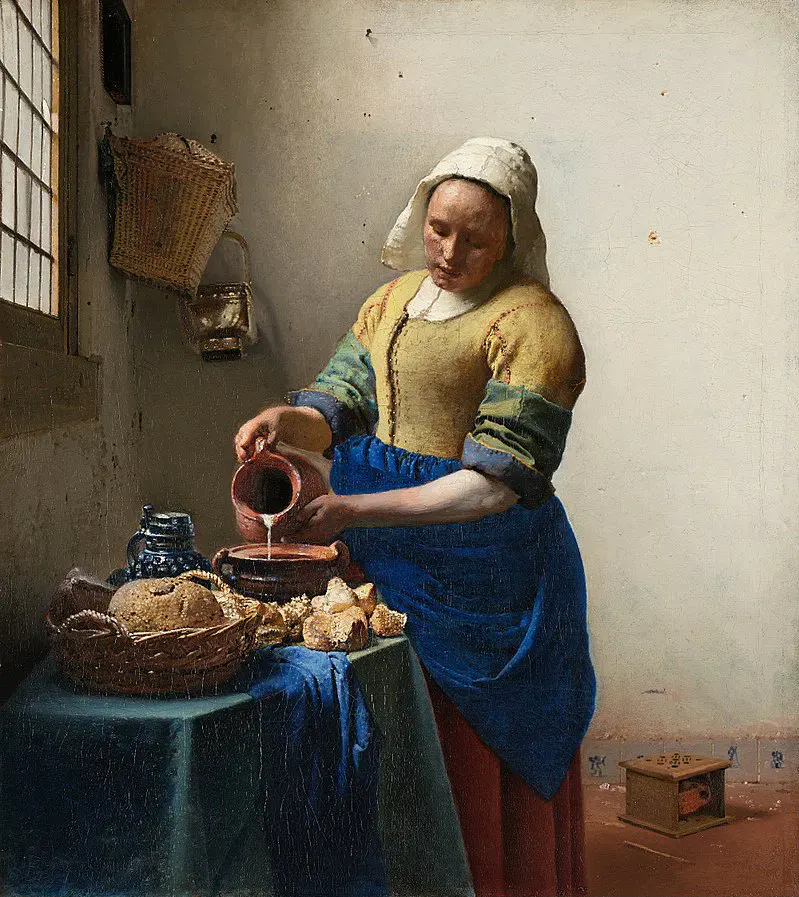
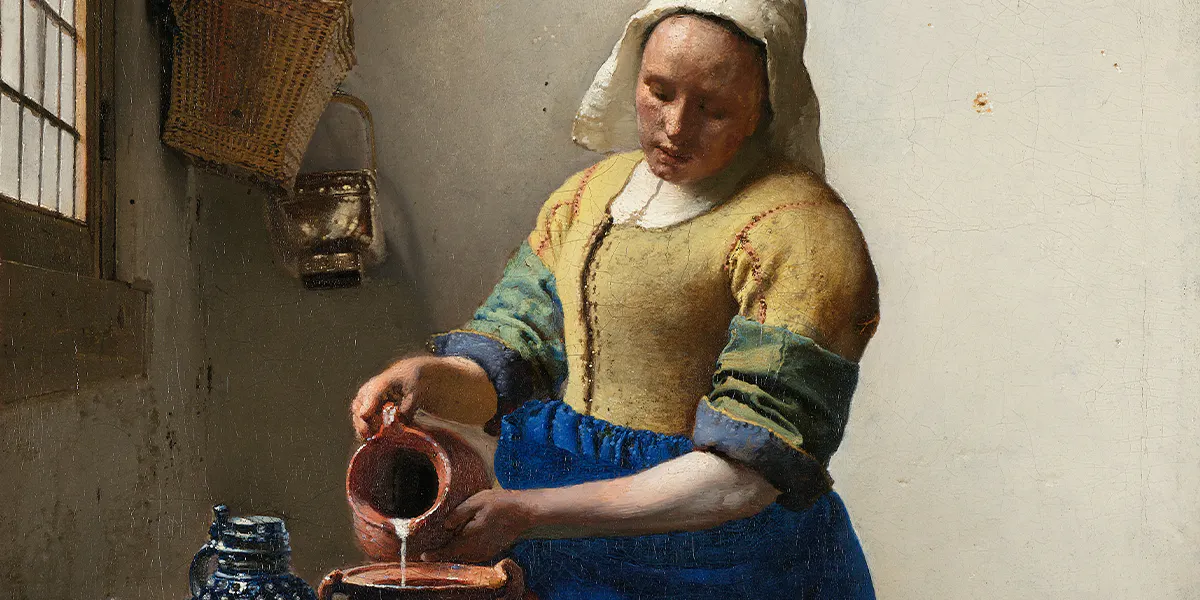
However, there have been discoveries, particularly in the area of perspective, that argue against the use of a camera obscura by Jan Vermeer: 13 of Vermeer's canvas paintings each have a tiny pinhole at the vanishing point. With the help of cords, the correct perspective could have been determined in this way. The art historian and curator of Dutch and Flemish painting at the Metropolitan Museum of Art, Walter Liedtke (1945-2015) said in a 2009 interview that the discovery of such a pinhole truly negated the idea of the camera obscura as in the painting The Milkmaid.
Related: Vermeer's Milkmaid Reveals Her Secrets
Ultimately, all that remains is that there are arguments for and against Jan Vermeer's use of a camera obscura. The only way to know the truth would have to be a clearly authenticated handwritten document by Vermeer, in which he mentions the use of a camera obsucra.